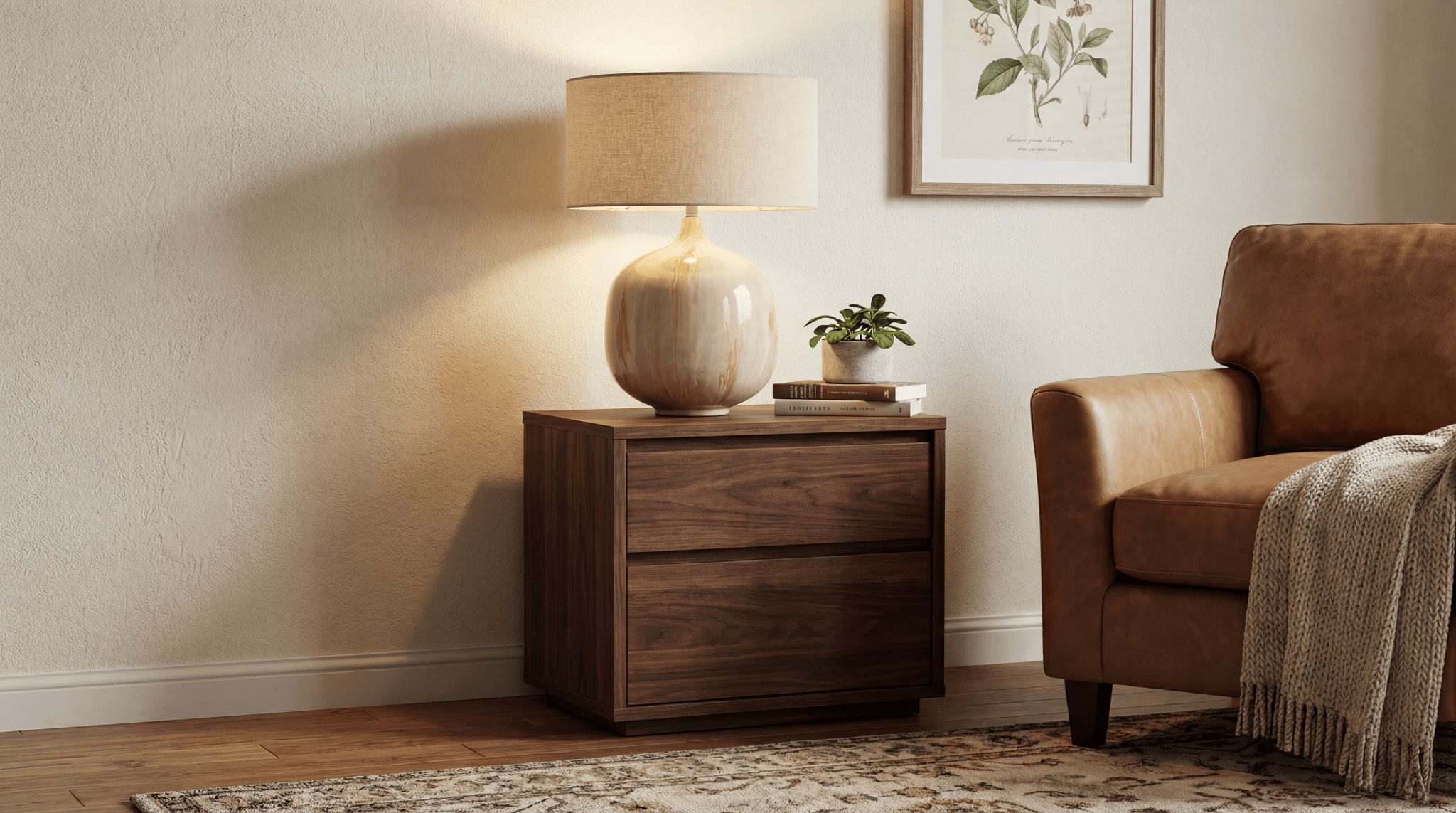
Lighting shapes a room more than most people realize. A mismatched lamp quietly flattens the entire space, and most buyers only notice once it's too late. That's why the decision deserves real thought.
Table lamps do more than fill a corner. They anchor furniture, layer light, and communicate a design point of view all at once.
At Sagebrook Home, we work with retailers, interior designers, and hospitality buyers who need lamps that look sharp and perform consistently. This guide covers exactly how to choose the right one
Key Takeaways
- Size proportion matters. Your table lamp and table combined should sit between 58 and 64 inches from the floor for comfortable, eye-level light.
- Match style to the room. Modern table lamps suit minimalist spaces; traditional table lamps anchor classic interiors. A mismatched lamp draws attention for the wrong reasons.
- Layer your lighting. Table lamps for living room and bedroom settings work best alongside ambient and accent sources, not as a standalone fix.
- Warm bulbs win. For bedside table lamps, stick to the 2700K to 3000K range for an inviting, restful atmosphere.
- The lampshade is part of the design. Table lamp shades directly affect light output and how the lamp reads as a whole object. Never treat it as an afterthought.
Table Lamps and Why They Matter
A table lamp is a freestanding fixture designed to sit on a surface, such as a nightstand, side table, desk, or console. Unlike ceiling fixtures, table lamps bring light down to human scale, creating warmth that makes a room feel lived-in rather than clinically lit from above.
Their purpose spans three categories. Task lighting helps you read or focus. Ambient lighting fills shadows left by overhead fixtures.
As Homes & Gardens notes, decorative lighting functions as a statement piece, adding visual interest even when the lamp is switched off.
Layering matters, too. A room lit only by a ceiling fixture tends to feel flat. Add bedside table lamps flanking a bed or table lamps for living room seating areas, and the space gains dimension, rhythm, and personality.
Types of Table Lamps
Bedside Table Lamps
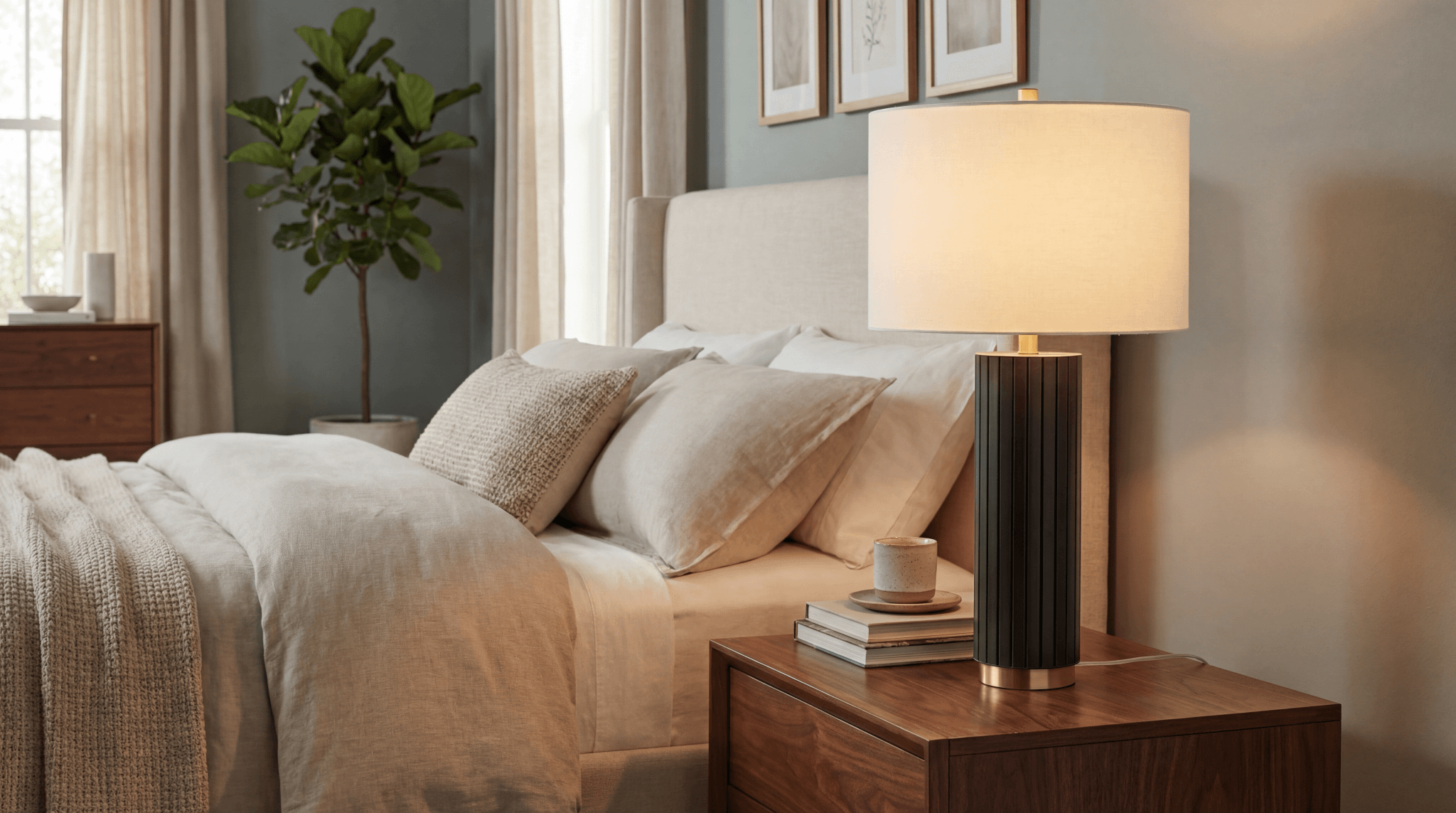
Bedside table lamps have one primary job: making your nighttime routine comfortable. The right lamp provides soft, directional light without flooding the entire room, so you can read, wind down, or reach for a glass of water without disturbing the space.
For most nightstands, a lamp in the 24 to 27-inch range works well. A few fit guidelines worth keeping in mind:
- The bottom of the shade should sit roughly at shoulder height when seated
- Compact bases with slim profiles suit smaller nightstands
- Clean silhouettes complement everything from mid-century beds to contemporary platform frames
Scale matters more than most people expect, both in comfort and in how the room reads overall.
Desk and Office Table Lamps
Task lighting in a home office demands precision. A good desk lamp concentrates light onto your work surface without creating harsh glare that causes eye strain over long sessions.
A few details worth prioritizing:
- Matte or brushed metal finishes add visual weight without visual clutter
- Adjustable arms give you control over light direction as you shift between tasks
- Avoid cool, high-contrast bulbs near screens; they worsen digital eye strain
As the American Optometric Association notes, poor lighting and glare are direct contributors to digital eye strain, making contrast between your screen and its surrounding environment a key factor in eye comfort. Your lamp choice, in other words, is as much a health decision as an aesthetic one.
Living Room Table Lamps
In the living room, table lamps serve an accent role just as much as a functional one. Placed on side tables flanking a sofa, they introduce a secondary light layer that overhead fixtures simply cannot replicate.
Symmetry matters here. Pairing two identical lamps on matching end tables anchors the seating arrangement and signals intentional design. Statement bases in sculptural shapes or rich finishes add a focal point while keeping the light soft and inviting.
For retailers and designers building out an assortment, our wholesale sourcing guide is a practical starting point.
Buffet and Console Table Lamps
Taller and more architecturally dramatic, buffet and console table lamps are designed to command attention. At 32 to 36 inches, they add vertical interest where horizontal furniture falls flat.
Proportion is everything in these placements. Consider:
- The lamp's height should feel intentional relative to the table and wall behind it
- Sculptural bases pair well with minimal consoles
- Elegant finishes create strong first impressions in entryways
- Avoid bases too narrow for the surface; visual stability matters
That first impression is worth getting right.
Accent and Decorative Table Lamps
Some lamps earn their place purely on looks. Accent and decorative table lamps are sculptural objects first, light sources second. Finishes like travertine, aged brass, and 3D-printed porcelain put the base at the center of the design conversation, and that's exactly the point.
They work across living rooms, bedrooms, and styled shelving alike.
Switched off, they read as art. Switched on, they bring warmth that enhances every texture around them. That dual quality is what makes them consistently strong performers for retailers.
How to Choose the Right Size Table Lamp
Choosing the Right Height
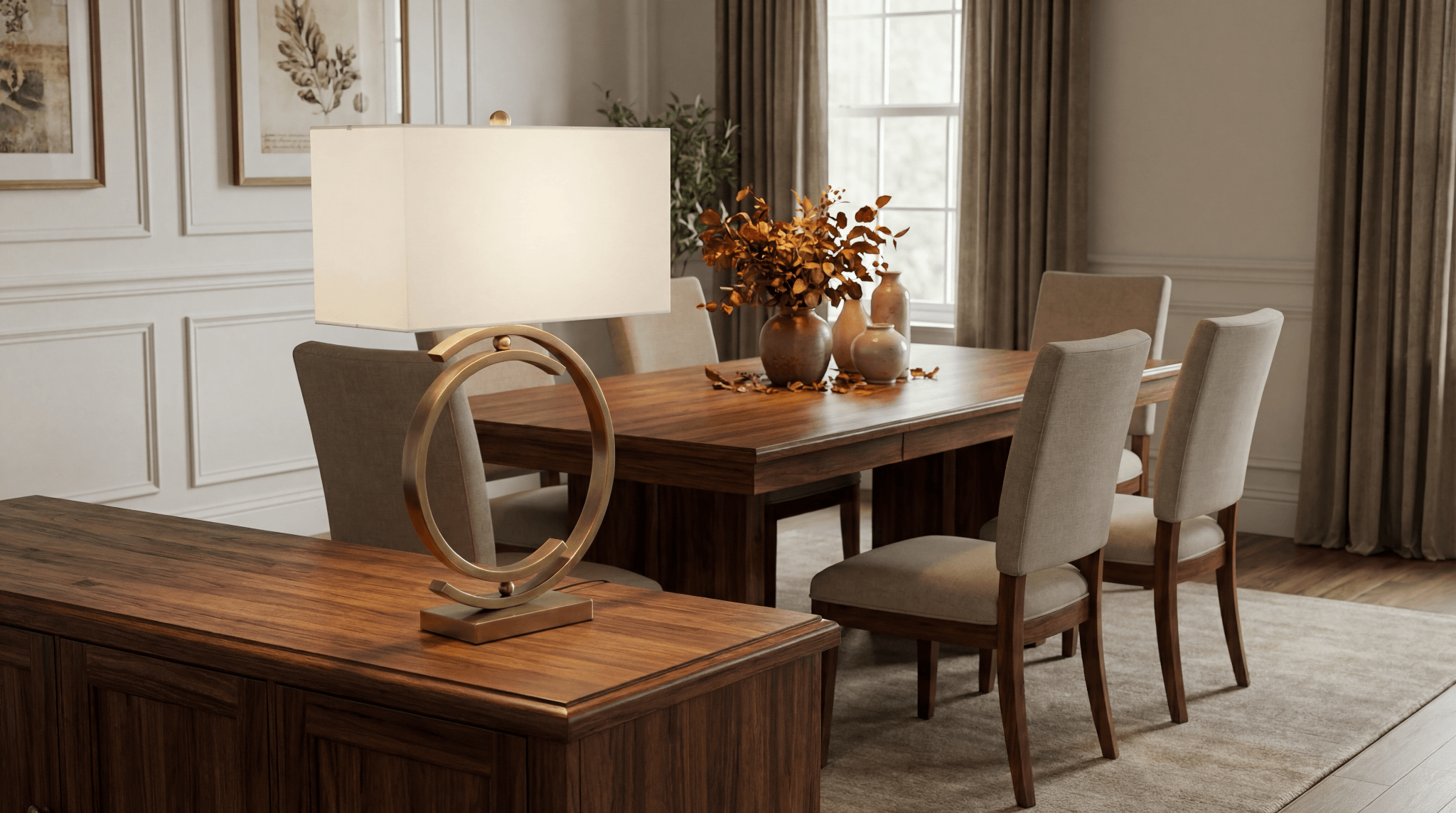
Proportion is everything in lamp selection. As Homes & Gardens notes, a table lamp placed on a surface should match the height of a nearby floor lamp, which typically sits between 58 and 64 inches from the floor.
That brings the shade to roughly eye level when seated, so glare stays out of your line of sight.
The right height also depends on where the lamp lives. Nightstands work best with lamps in the 24 to 27-inch range, living room end tables call for 28 to 34 inches, and console or buffet surfaces can carry lamps up to 36 inches, particularly in rooms with higher ceilings.
Choosing the Right Shade Size
The shade shapes the light, defines the lamp's silhouette, and contributes as much to the overall aesthetic as the base itself.
Getting the size wrong throws off the entire composition, even when everything else is right.
Proportion guides the decision. The shade's width should be roughly two-thirds of the base height, and its height about one-third of the lamp's total height. Beyond that, it should never extend wider than the table beneath it, with at least two inches of clearance on all sides to keep the proportions balanced.
Understanding Lighting Needs
Ambient Lighting
Ambient lighting is the foundational layer of any room's lighting scheme.
It fills the space with warmth without directing attention toward any specific area, and table lamps contribute meaningfully to that effect, particularly in corners and on low surfaces where overhead fixtures tend to cast shadows.
To get ambient lighting right, aim for:
- Bulbs in the 400 to 800 lumen range
- Color temperature around 2700K to 3000K
- Multiple light sources rather than a single overhead fixture
- Placement in corners and on low surfaces to counter overhead shadows
That combination is the most effective upgrade you can make to a room's atmosphere.
Task Lighting
Task lighting is brighter, more focused, and built around a specific activity. Reading in bed, working at a desk, or applying makeup all call for a lamp that directs sufficient light onto the task without flooding the whole room. The lamp's position and output both matter here.
For task settings, consider:
- Bulbs in the 800 to 1100 lumen range
- Color temperature between 3000K and 4000K to reduce eye strain
- Adjustable arms that let you redirect light as your needs shift
When the lamp serves the same purpose in the same spot, a fixed directional shade works just as well.
Accent Lighting
Accent lighting draws the eye toward something specific, whether that's artwork, an architectural detail, or a styled shelf. The goal is focused light, not room-wide brightness. A lamp with a narrow or opaque shade produces a concentrated pool of light, making it well suited for accent applications.
Lower lumen output in the 200 to 400 range is often enough. The softer the glow, the more intentional the space reads, and that's precisely the effect well-styled interiors are after.
Popular Table Lamp Styles
Modern Table Lamps
Modern table lamps are defined by clean geometry, restrained palettes, and materials that favor visual honesty. Metal and glass dominate the category, with brushed nickel, matte black, and warm gold finishes pairing naturally with contemporary interiors built around neutral foundations.
Their strength lies in restraint. A well-chosen modern lamp anchors a space without competing with it, sitting comfortably alongside bold furniture, interesting rugs, and statement art. That versatility is precisely why modern lamps remain one of the strongest-selling categories in wholesale lighting.
Traditional Table Lamps
Traditional table lamps are rooted in classic craftsmanship. Turned ceramic bases, richly finished wood, and fabric shades in warm neutrals communicate heritage and permanence.
Antique brass, oil-rubbed bronze, and aged ivory finishes feel at home in formal living rooms, library settings, and traditional dining rooms.
The shade matters just as much as the base. Pleated or empire-shaped shades in linen or cotton reinforce the classic character beneath them, wrapping the room in a warm, even glow that feels deliberate.
Industrial Table Lamps
Industrial table lamps draw from urban lofts and converted warehouses. Exposed Edison bulbs, cage shades, weathered metals, and pipe-inspired silhouettes define the look, and that aesthetic resonates with younger buyers and commercial projects alike, from boutique hotels to co-working spaces and modern restaurants.
Nothing here tries to look polished. That deliberate rawness is the point, and in the right setting, it creates an atmosphere that feels genuinely its own.
Coastal and Natural Style Lamps
Coastal and natural style lamps bring the outdoors in.
Rattan bases, whitewashed wood, woven textures, and soft neutral tones give these lamps an airy, relaxed quality that suits beach houses, Scandinavian interiors, and any space built around a grounded, organic feel.
Paired with linen shades in cream or off-white, they cast diffused, warm light that softens a room without demanding attention.
That quiet restraint is what makes them easy to live with.
Glam and Luxury Lamps
Crystal table lamps, marble bases, and gold-finished metals define the glam and luxury category.
These pieces are unapologetically opulent. A crystal lamp on a mirrored side table or a gold-toned base with a silk shade signals upscale living, resonating in primary bedrooms, formal sitting rooms, and high-end hospitality environments.
For designers working with premium clients, the appeal is straightforward. Glam lighting elevates everything around it, making even a simple room feel intentionally designed.
Best Materials for Table Lamps
The material of a lamp base shapes its character long before you turn it on. Each option brings something distinct to a space, so understanding the differences helps narrow the right choice.
The most common lamp base materials and what they offer:
- Ceramic: Versatile, available in hundreds of glazes, and accessible across price points
- Metal: Durable and wide-ranging, brass, iron, and aluminum each carry a distinct finish and style
- Glass: Light-catching and elegant, whether transparent, frosted, or etched
- Wood: Warm and organic, reclaimed and bamboo options appeal to sustainability-conscious buyers
- Resin and mixed materials: Ideal for creative forms and trend-driven finishes like travertine-look or eco-mix composites
Material integrity and finish consistency are the baseline standards worth holding any supplier to.
Choosing the Right Lamp Shade
Fabric Shades
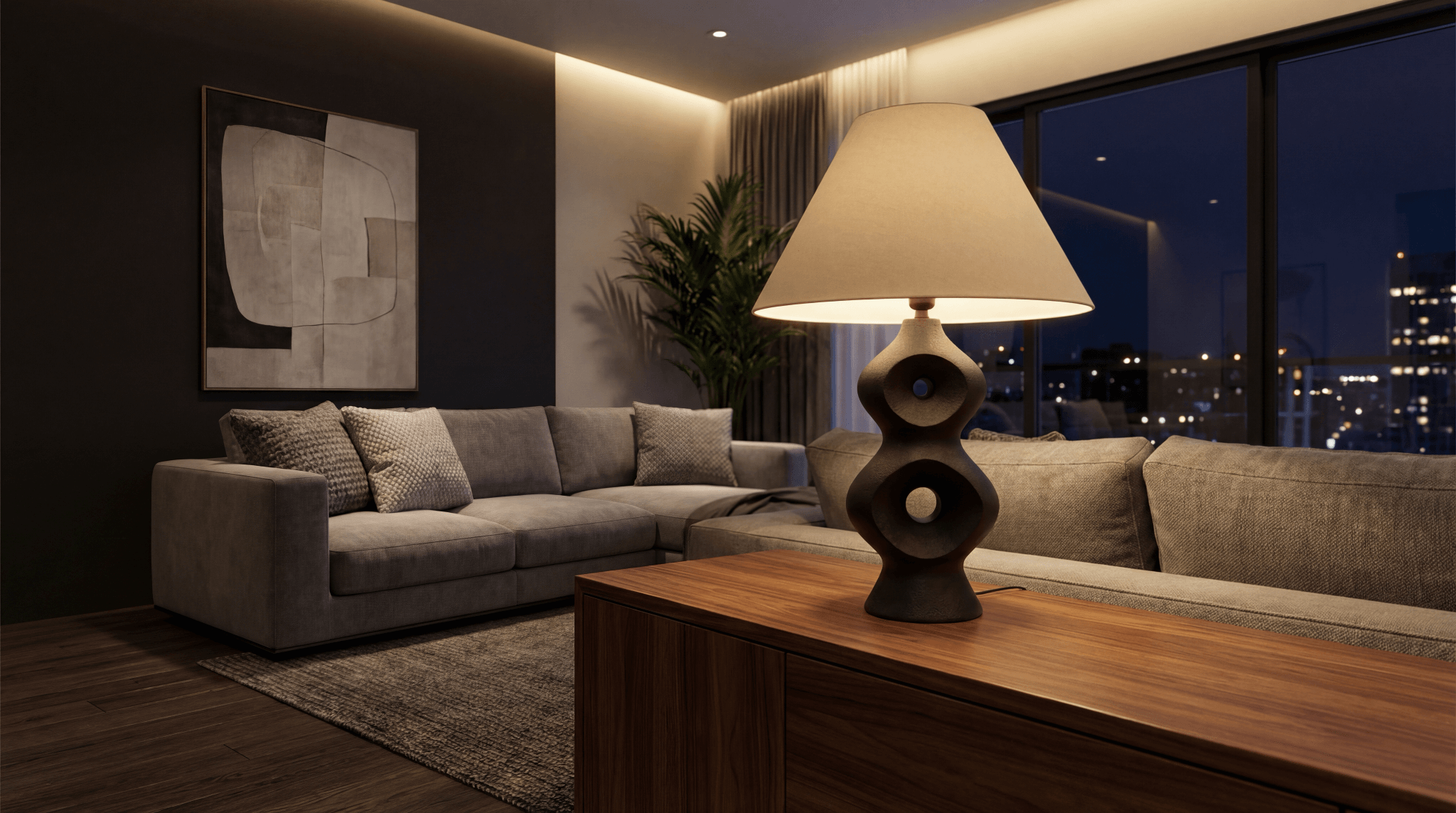
Fabric shades diffuse light beautifully, producing a soft, even glow that reads as warm and welcoming. Linen is particularly popular because its natural weave filters light while keeping the bulb out of direct view. Cotton offers a crisper look with a wider color range, making it a practical choice when the shade needs to carry a specific tone.
With any fabric-shaded table lamp, pay close attention to the lining. A white lining maximizes light output, while a gold lining adds a warm cast. That single detail changes how the entire lamp reads in a room.
Hardback Shades
Hardback shades have a rigid structure that gives them a cleaner, more architectural look. They hold their shape over time without sagging, making them a reliable choice for commercial settings where lamps see heavier daily use.
The trade-off is directionality. Hardback shades push light downward rather than diffusing it outward, which suits task and accent applications well. In a living room or bedroom context, that focused quality can feel less ambient than fabric alternatives.
Shade Colors
White and off-white shades maximize brightness and pair naturally with almost any base or finish. Darker tones such as charcoal, navy, and muted terracotta produce a moodier, more intimate effect, directing light downward to create atmosphere rather than broad illumination.
The surest path to visual cohesion is matching shade color to the room's dominant tones.
A lamp that feels integrated rather than placed reads as intentional, and intentional design always feels more considered regardless of price point.
Bulb Guide for Table Lamps
LED bulbs have replaced incandescent as the standard for table lamps.
They consume significantly less energy, last longer, and run cooler under fabric shades. The real decision comes down to color temperature, and the 2700K vs 3000K vs 4000K comparison breaks down exactly how each range performs.
A quick reference:
- 2700K to 3000K: Warm, amber-toned light suited for bedrooms, living rooms, and dining areas
- 3500K to 4000K: Cooler and crisper, better for home offices and task-focused settings
- 8 to 12-watt LED: Delivers the output of a traditional 60 to 100-watt incandescent
- Dimmable bulbs: Paired with a compatible dimmer, they give full control over mood at any time of day
Getting the temperature right costs nothing extra. It just requires knowing what you're buying before you buy it.
Where to Place Table Lamps in Every Room
Bedroom
Bedside table lamps work best in pairs, placed on matching nightstands on either side of the bed. Beyond the symmetry, each occupant gets their own light source for reading without disturbing the other.
Keep these details in mind:
- Lamp height should bring the shade level with your shoulder when seated in bed
- Stick to a warm 2700K bulb to support wind-down routines
- As Health Lighting's color temperature guide notes, warmer evening light supports melatonin production
Living Room
Resist the urge to rely solely on a ceiling fixture. Table lamps on side tables beside sofas and chairs create a layered effect that makes a space feel comfortable rather than simply lit.
Console tables behind sofas and accent tables in corners work just as well.
The goal is distributing light so no area falls into deep shadow. That layered approach is a foundational principle of residential design, and table lamps are its most accessible tool.
Home Office
Placement matters most here. Position your desk lamp to the left of your monitor if you're right-handed, or to the right if you're left-handed. That keeps light on your work surface and away from the screen, reducing the contrast that causes eye fatigue over long sessions.
Two rules worth holding to:
- Direct light onto the work surface, not toward the screen
- Opt for a 3500K to 4000K bulb to support focus without strain
Dining Room
A buffet or console lamp in the dining room adds ambient warmth that a chandelier simply cannot provide on its own. Positioned against a wall or sideboard, a taller lamp with a fabric shade softens the room and adds visual interest at a lower level.
Keep the bulb warm and the lumen output low. Dining rooms benefit from a soft, flattering glow that makes food look appealing and conversation feel natural.
Entryway
The entryway sets the tone for everything that follows.
A statement lamp on the console table, ideally taller with a sculptural base, communicates your design point of view the moment someone walks in. Pair it with a mirror above and a small tray or vase alongside it.
Together, the vignette reads as a styled moment rather than a transitional space.
Guest Room
Guest rooms call for compact, welcoming lamps that are intuitive to use. One lamp per nightstand works well, but the details matter just as much as the placement.
- Make sure the switch is easy to locate in the dark
- A pull-chain or touch-activated switch removes guesswork for unfamiliar visitors
- Warm, low-output bulbs keep the atmosphere relaxed and restful
- Avoid overly complex or decorative bases that feel out of place in a neutral, welcoming setting
Small considerations like these are what separate a thoughtful guest room from a forgettable one.
Top 10 Table Lamps for Every Space
Every space has a lamp that fits it perfectly. Browse the full Sagebrook Home table lamps collection for the complete range.
Below are ten standout pieces suited to a variety of spaces and design directions.
1. 28x22" Metal Base Table Lamp in Ivory (51533-01)
A quiet ivory and gold pairing that suits both glam and transitional interiors.
At 28 inches, it's well-proportioned for a bedroom dresser or formal living room side table. The warm ivory base grounds the piece, while the gold detailing adds a refined shimmer without tipping into excess. It reads as elevated without demanding attention.
Shop the 28" Metal Base Table Lamp in Ivory
2. 28" Metal Table Lamp in Gray (51391)
Sleek and restrained, this gray metal lamp brings a modern edge without overpowering a room. At 28 inches with a 15-inch footprint, it fits most standard side tables and nightstands. The muted gray finish sits naturally alongside white, charcoal, and warm wood tones, making it a reliable building block for a cohesive interior scheme.
Browse the 28" Metal Table Lamp in Gray
3. 30x20" Half-Circles Rectangle Shade Lamp in Antique (51346)
Texture and geometry do most of the work here.
The antique bronze and copper finish gives the base a warm, aged quality, while the rectangular shade's half-circle cut-outs cast an intriguing play of light across surrounding walls. It suits dining rooms and entryways well, anywhere a lamp needs to hold its own as a design object.
Explore the 30" Half-Circles Rectangle Shade Lamp in Antique
4. 28" Open Cut-Out Table Lamp in Black/Tan (51335)
A ceramic base, iron frame, and linen shade make for a lamp that balances structure with softness. The open cut-out detail on the base adds architectural interest, and the black-and-tan combination reads as modern with enough warmth to avoid feeling stark.
A natural fit for transitional and contemporary living rooms.
See the 28" Open Cut-Out Table Lamp in Black/Tan
5. 26" Rardan Eco-Mix Table Lamp (EV23479)
Part of the Elevarre collection, the Rardan is made from eco-mix material in a clean white and gold colorway. At 26 inches and 15 inches wide, it has the compact profile of a refined bedside lamp.
Its sustainable material story makes it a compelling option for environmentally conscious retail settings and design-led clients.
Discover the 26" Rardan Eco-Mix Table Lamp
6. 26" Covington Quartz Resin Table Lamp (EV51508)
The Covington pairs quartz and resin in a multi-toned base that shifts with the light around it.
Silver, white, and translucent tones create depth without drama. It's a sophisticated choice for bedrooms and home offices where the lamp enhances the space without competing with it.
Get the 26" Covington Quartz Resin Table Lamp
7. 26" Culpeper 3D Printed Porcelain Table Lamp (EV51514)
3D-printed porcelain is one of the more compelling material stories in contemporary home decor, and the Culpeper delivers it well. The intricate surface pattern achievable through the printing process gives this 26-inch lamp a distinctiveness that hand-finished ceramics can't replicate at scale. A standout for design-led retailers and clients after something genuinely original.
Shop the 26" Culpeper 3D Printed Porcelain Table Lamp
8. 26" Hallberg Travertine Table Lamp in Gold/Ivory (EV51293)
Weighing in at 19 pounds, the Hallberg has the kind of physical presence that reads immediately as premium. The travertine-textured base pairs with a gold and ivory palette for a result that feels undeniably elevated. Travertine has remained one of the dominant material trends across several seasons, and this lamp translates that energy into a versatile accent piece.
Browse the 26" Hallberg Travertine Table Lamp in Gold/Ivory
9. 30" Nelson Gold Table Lamp (EV51491)
Tall, bold, and unapologetically modern. At 30 inches with a gold-finished metal construction, the Nelson makes a strong architectural statement on a console table in an entryway or a side table in a generously scaled living room.
For retailers targeting a glam or luxury segment, it anchors any curated lighting display with confidence.
Explore the 30" Nelson Gold Table Lamp
10. 26" Londynburg 3D Printed Porcelain Table Lamp (EV51513)
A companion to the Culpeper in material and process, the Londynburg brings its own distinct surface pattern to the 3D-printed porcelain category. At 26 inches and 7 pounds, it has the presence of a serious design object with the practical proportions of a bedside or accent lamp.
The warm glow it produces through its shade makes it as functional as it is visually compelling.
See the 26" Londynburg 3D Printed Porcelain Table Lamp
Mistakes to Avoid When Buying Table Lamps
Even a well-chosen lamp fails when the basics are overlooked. The most common mistakes come down to a few avoidable details:
- Wrong height: The combined table-plus-lamp height should land between 58 and 64 inches for most living spaces
- Bulb mismatch: Pair lumen output and color temperature to the room's actual use, not just the socket size
- Ignoring scale: A lamp sized for a boutique hotel suite will overwhelm a compact bedroom side table
- Style conflicts: A rustic wooden base rarely belongs in a sleek, minimalist interior
- Poor placement: Avoid positioning lamps behind curtains, on coffee tables, or anywhere they cast glare toward a screen
Choosing the right table lamp for your design or retail projects means sourcing from suppliers who understand these nuances and stock products designed with them in mind.
Why Retailers and Designers Choose Sagebrook Home for Table Lamps
Our wholesale catalog spans hundreds of table lamp designs across every major style, finish, and material category. From clean modern lines to sculptural 3D-printed porcelain, we stay close to emerging trends so buyers can stay ahead of them.
Fast fulfillment and responsive service keep orders moving on schedule. Furnishing a single project or stocking a full showroom, the depth of our catalog gives you real flexibility.
Variety, reliability, and design intelligence are what separate good suppliers from the right ones.
Is Your Space Getting the Most Out of Its Lighting?
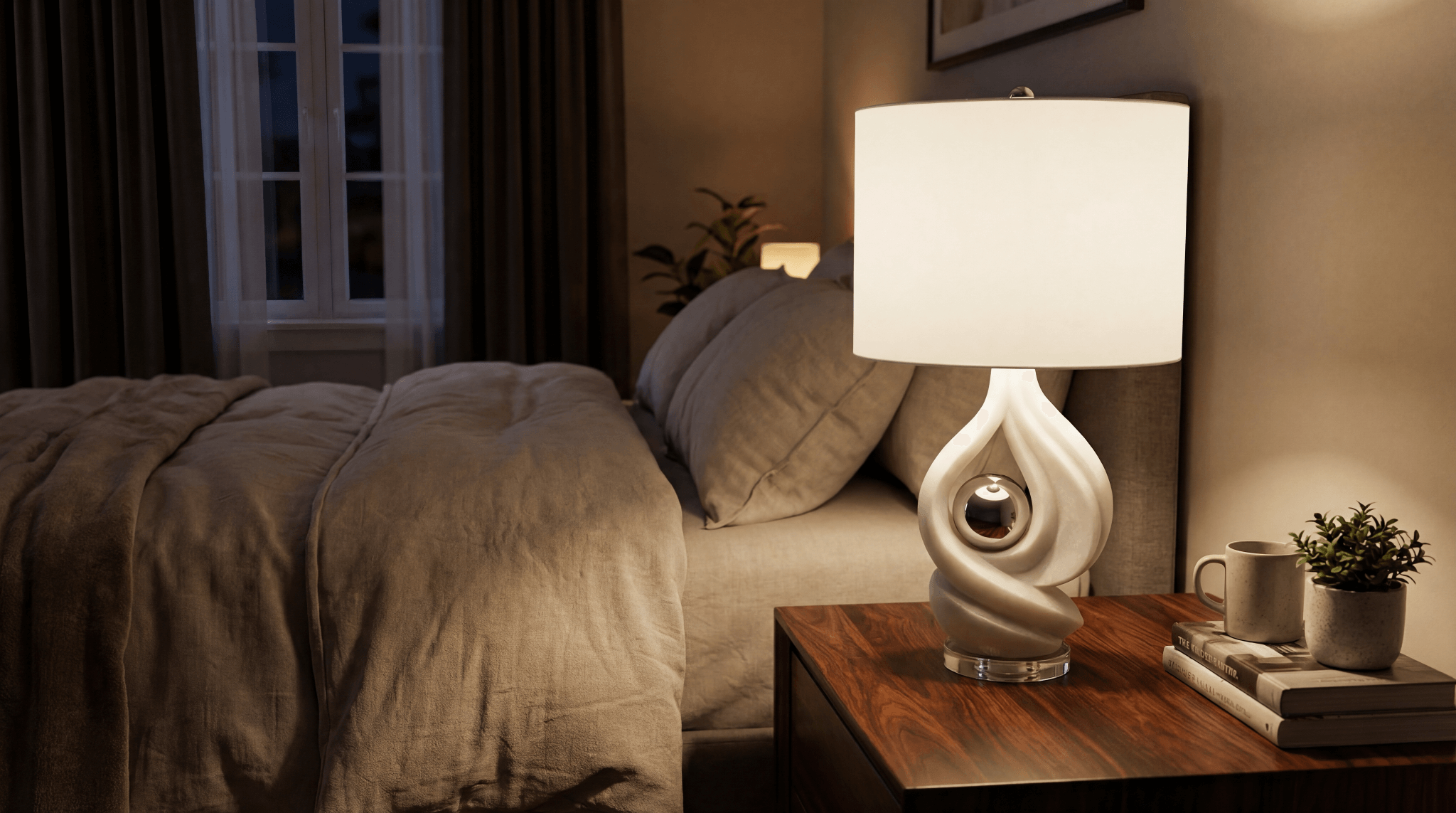
A table lamp shapes how a room feels, functions, and comes together visually. Getting it right means thinking through proportions, lighting layers, and style before committing to a piece.
When you're ready to explore, the full table lamps collection at Sagebrook Home offers the range and quality to match any project scope. Prefer to see the pieces in person? Browse upcoming showrooms and events to connect with the team directly.
FAQs
How tall should a table lamp be?
The combined table-and-lamp height should fall between 58 and 64 inches. Bedside table lamps typically work best between 24 and 27 inches, while table lamps for living room side tables often range from 28 to 34 inches tall.
What bulb color temperature is best for a bedroom table lamp?
Warm white bulbs in the 2700K to 3000K range suit table lamps for bedroom use best. That temperature mimics soft incandescent light, supporting a relaxed atmosphere that helps with winding down before sleep.
Can I mix different table lamp styles in the same room?
Yes, with intention. Modern table lamps and traditional table lamps can coexist when they share at least one common element, such as a finish or scale. A shared matte black finish, for example, ties industrial table lamps and contemporary pieces together naturally.
What is the difference between a fabric shade and a hardback shade?
Fabric table lamp shades diffuse light softly in all directions, creating warm ambient glow. Hardback shades direct light downward with a cleaner, more defined effect. Fabric suits traditional styles, while hardback leans contemporary. The right lampshade and table lamp pairing depends on the room's lighting purpose.
How do I choose the right table lamp shade size?
The shade width should be roughly two-thirds of the base height. Table lamp shades should never extend wider than the surface beneath them, with at least two inches of clearance on all sides to keep the proportions balanced and avoid a top-heavy look.